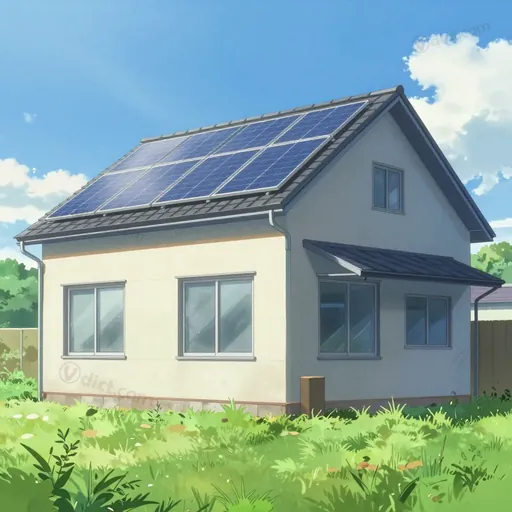
solar house
Noun: A house specifically designed to capture and utilize solar radiation as its primary source for heating. This architectural design typically incorporates extensive south-facing glazing (windows) and incorporates materials that absorb and retain thermal energy.
This term is used to describe a residential building whose fundamental design principle is passive solar heating. It refers to the architectural concept and structure itself.
Examples: - The architect specialized in designing energy-efficient solar houses. - They built a solar house to minimize their reliance on fossil fuels for winter heating. - Living in a solar house requires an understanding of how to manage the internal temperature through shading and ventilation.
- As a concept in sustainable design: The term is often used in discussions about renewable energy, green building, and sustainable architecture.
- The principles behind the solar house have influenced modern building codes for energy efficiency.
- Passive solar design: The architectural and engineering principles used to create a solar house.
- Active solar heating: A related but distinct system that uses mechanical devices like pumps and fans to distribute solar heat, which may or may not be part of a "solar house."
- Passive solar home
- Sun-heated house
The core meaning is architectural and functional. It does not simply mean "a house with solar panels" (which is typically called a "house with photovoltaic/solar panels" or a "solar-powered house"). The defining feature is the use of the building's design, orientation, and materials to passively capture and store heat from the sun.
-
a house designed to use solar radiation for heating; usually has large areas of glass in front of heat-absorbing materials